Table of Contents
Introduction to Composition in Photography
I’ve wrote quite a few articles about photography composition starting with my first article ever written. But as I would like to be more specific about some of the rules I decided to dedicate this piece to the topic of one of my favourite rules.
When it comes to composition, the way you arrange objects in the frame, I would say it happens rather in a holistic way. Being out photographing we usually have a very limited time to take a picture and we don’t have time to think which rule to use in a moment.
That’s why I often tell that learning photography is a bit like learning a language. The golden triangle rule in photography, as well as all the other rules is your grammar, but you don’t think of grammar when you speak the language fluently. So photography is a visual language and composition is your way to speak to your audience.
Composition rules are all usually connected to geometry since we have a rectangular frame and there are certain ways to input and distribute things within it. And the position of your characters/words/subjects as important for your narrative as positioning of letters in words.
Badly composed photograph is like a badly written text where you can’t put together what the author wanted to say at all.
The Role of Composition in Storytelling
Good composition connects the viewer emotionally with the subject. It creates a rhythm—a visual pathway for the eyes to follow—ensuring the image resonates well beyond the first glance. I’d say it’s when your photographs hold the viewer’s attention for longer than just a few seconds.
A good photograph is typically stable, keeping the viewer’s gaze anchored without letting it slide away too quickly. This stability often evokes a subconscious sense of comfort. Balanced and well-structured compositions are enjoyable to look at, even if the viewer doesn’t fully understand why.
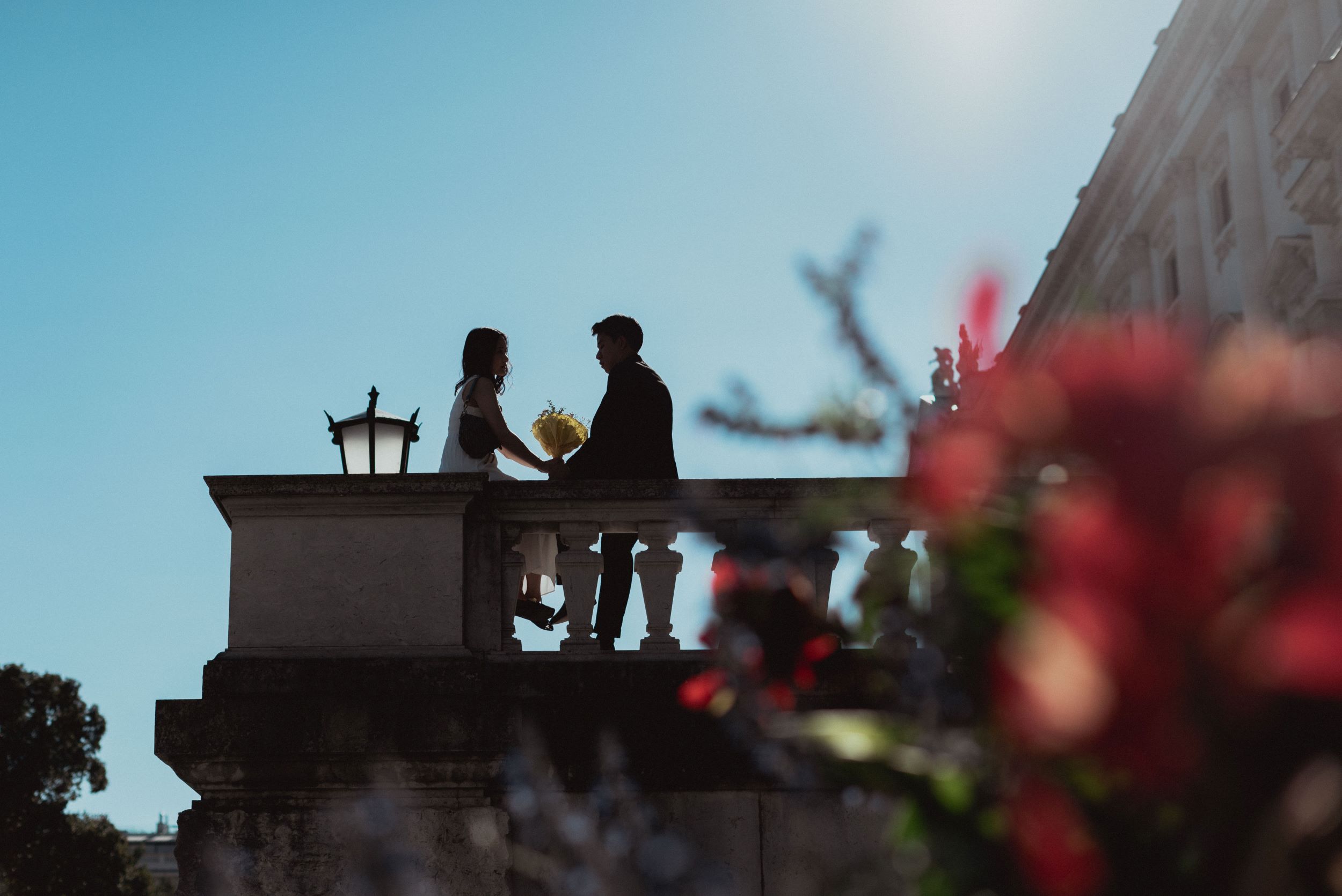
The Golden Triangle Rule in photography is one such guideline that helps you craft these balanced compositions, offering a great variety of possibilities. Even static scenes can appear dynamic and interesting when composed using this rule.
Overview of Compositional Techniques
From the Rule of Thirds to symmetry and leading lines, you can use various techniques to structure your images. If we try to find a common thing among all of these rules, it’s usually about creating compositions where nothing pulls your attention too much to the edge of the frame.
In every compositional rule you keep the attention points closer to the centre. And as your compositions become more complex, instead of simply achieving stability by using symmetry, you create the flow of your composition. Among many rules, the Golden Triangle Rule in photography stands out for its ability to inject a sense of energy and harmony. There is flow in these triangles and compositions created with this rule will make you wander around the photograph with your eyes.
What is the Golden Triangle Rule In Photography?
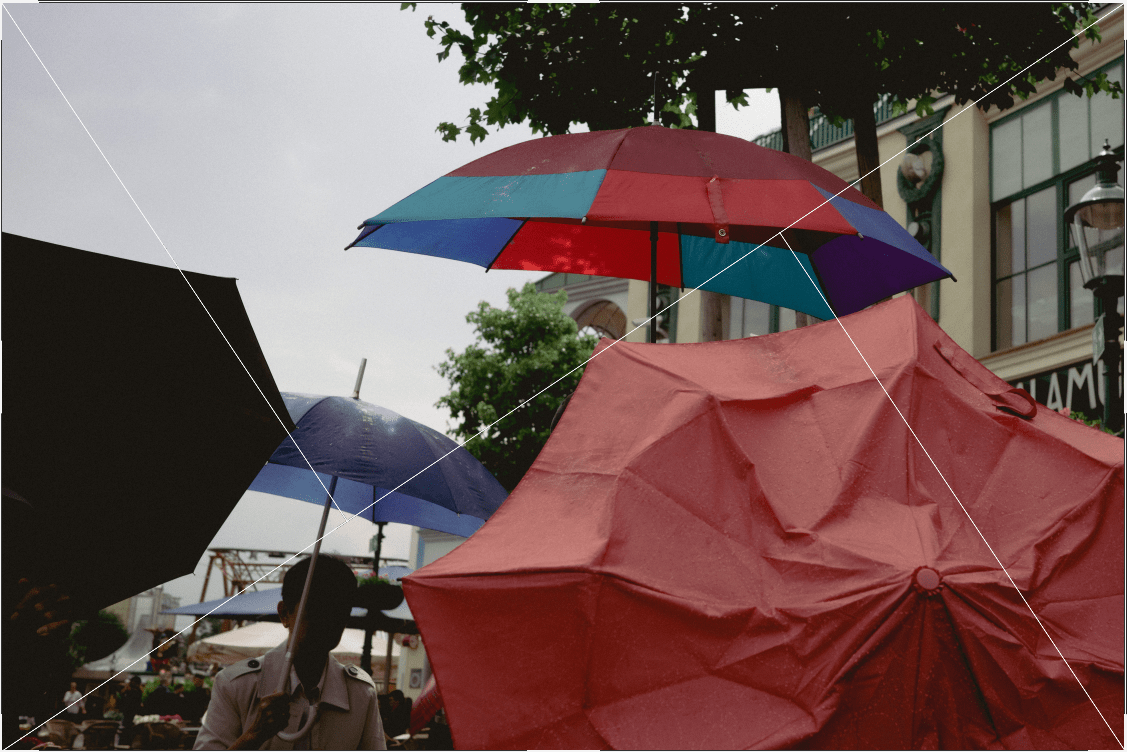
The Golden Triangle Rule in photography is a compositional guideline that uses diagonal lines to divide the frame into triangles, creating intersections where focal points can be placed. Additionally, the diagonal lines act as guides, helping you distribute other elements to achieve a balanced composition. Sometimes, entire triangles can be filled with one large object or multiple smaller ones, creating a sense of harmony and structure within the frame.
How It Differs from the Rule of Thirds
Unlike the Rule of Thirds, which relies on a grid of vertical and horizontal lines, the Golden Triangle employs diagonals. This makes it ideal for scenes with angular elements or dynamic movement. Additionally, if you consistently use this type of composition, you’ll naturally become more attuned to capturing dynamic scenes, as opposed to the more static compositions associated with the Rule of Thirds.
I’d say the Golden Triangle Rule in photography is a more complex guideline that demands a bit more control and skill, making it better suited for those already familiar with the basics of the Rule of Thirds.
Understanding the Geometry of the Golden Triangle Rule In Photography
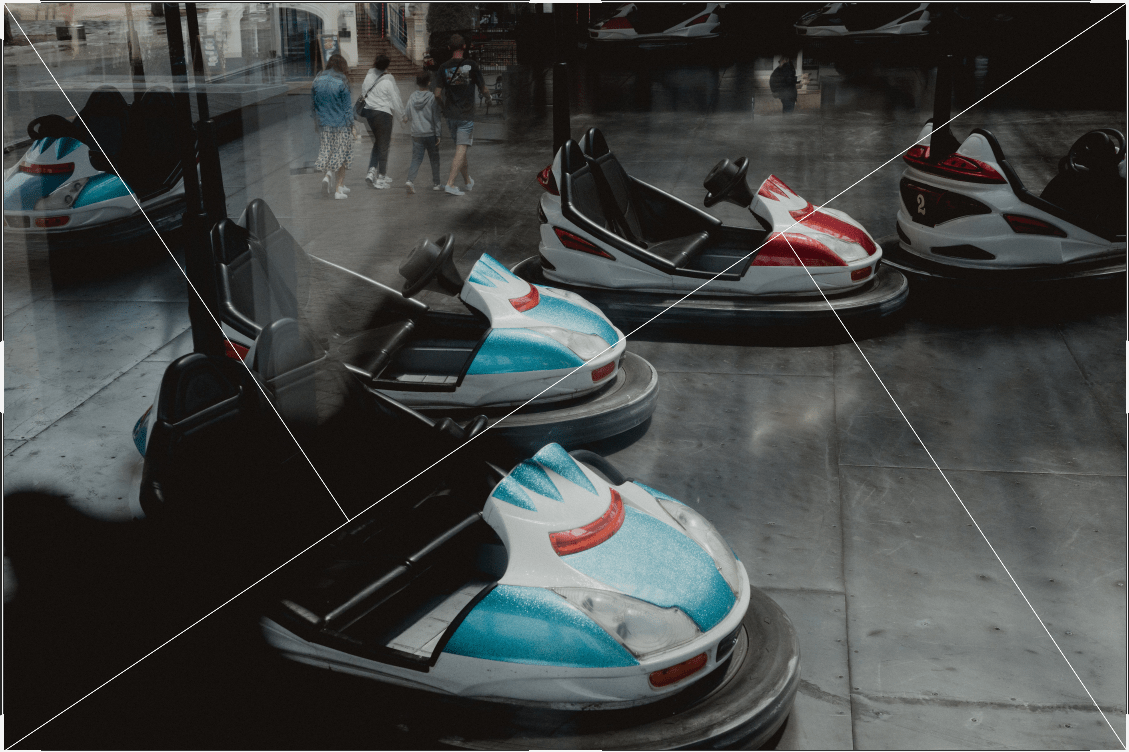
The Golden Triangle Rule in photography divides the frame with one diagonal line and two smaller lines originating from its endpoints, creating triangular sections. This, as we talked in the beginning, creates stable compositions, where compositional shapes divide the frame into equal parts. This grid uses exclusively diagonal lines and if you place your subjects along these lines you will have a very dynamic composition which is simply pleasant to see.
The Psychology of Diagonal Compositions
Diagonal lines naturally evoke a sense of motion and tension, engaging the viewer more deeply. They guide the eyes in a way that feels both deliberate and organic.
These compositions will always have flow, and compositions with flow create the effect that the viewer will explore the entire photograph, following along these diagonal lines. This is where I can also mention leading lines (which I think are overvalued as a rule). They guide your gaze, directing it to specific points in the composition.
Although most people associate leading lines with photographing fences or railings stretching into infinity in the middle of the frame, leading lines can be more subtle. They can traverse the frame in less obvious ways. Imagine, for instance, shadows forming diagonal lines that point towards your subject—these too can act as leading lines while maintaining the dynamic balance of the composition.
Why Use the Golden Triangle Rule?
The rule is more than a geometric gimmick; it’s a way to add vibrancy and coherence to your photographs. With this more deliberate approach to creating dynamic compositions, you can get more complex and interesting shots. Not just one subject on the thirds or in the middle, but a set of objects aligned in a whole orchestra of triangles in your frame.
Guiding the Viewer’s Eye
The intersecting lines subtly direct the viewer’s focus, making even a complex scene feel harmonious and intentional. It’s also makes you think of foreground and the background, usually placing foreground object along the biggest diagonal line and background objects along the top left corner line, you divide the frame and guide the viewers eye from foreground to background.
How to Apply the Golden Triangle
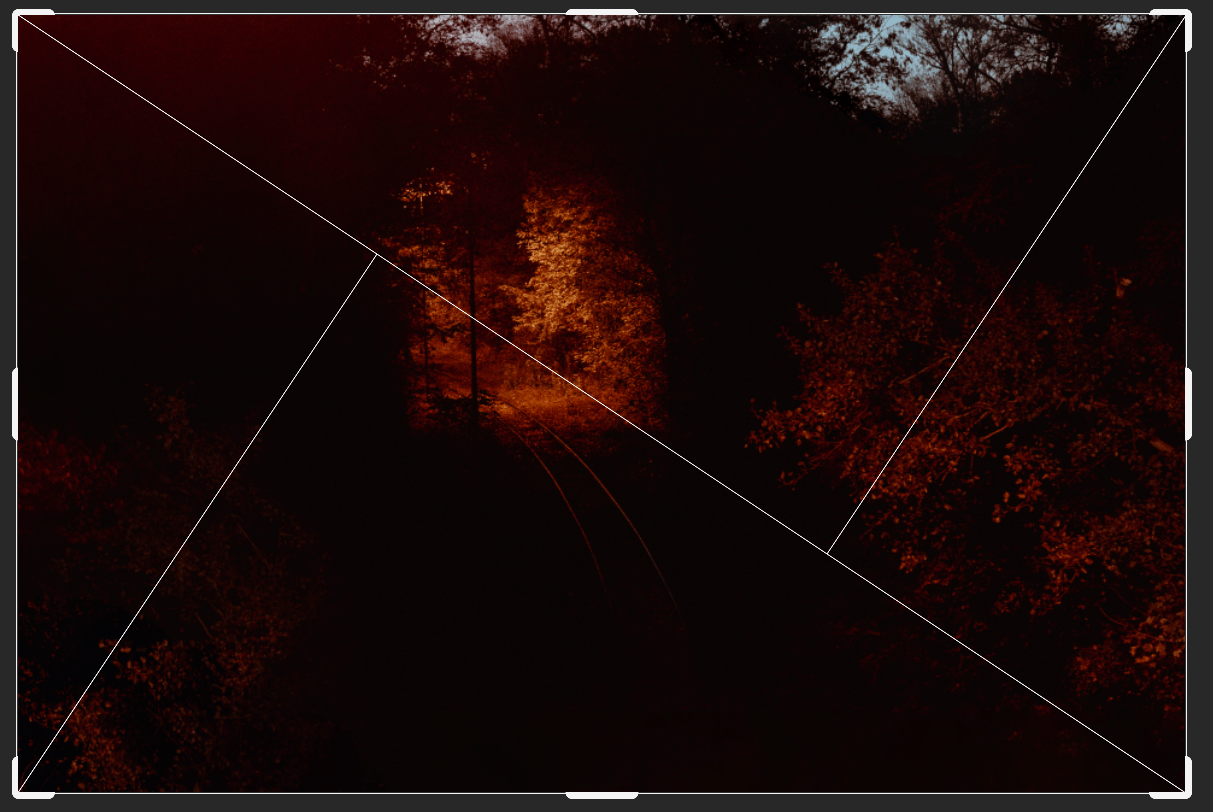
Mastering this rule requires a blend of observation and planning. At first you will only be able to photograph slow paced scenes. But as a drill I would encourage you to photograph only this type of compositions for a while.
In some of the cameras, but not all, you can go to grid setting and choose golden triangle grid that will help you to place your subjects accordingly. In each camera it’s different but that’s usually in the top of the settings menu rather among shooting modes and else.
If you don’t have this grid you can use “rule of thirds” grid. Then imagine the diagonal lines and place your main subjects on intersections while the rest on the imagined diagonals.
Identifying Strong Subjects and Lines
Look for natural or artificial lines in your scene—like rivers, roads, or shadows—that can form the framework of triangles. The easiest example is if you do landscape photography, you can place a mountain in one of the triangles, then that will be the most apparent shape that will form the biggest part of the composition
Tips for Framing Your Shot
Again, start with something simple like nature. You could try this rule out in a park where the environment is not too busy, giving you time to compose your frame. If you’re on the streets, use rooftops, umbrellas, shadows, and different signs for your diagonal lines.
One thing: make sure not to tilt the camera to get diagonal lines in the frame. It usually doesn’t look dynamic but rather unnatural, as if the photographer was too drunk to stand straight when taking the picture. Unless your photograph is an abstraction, it’s best to keep the horizon line straight and not tilted—unless you’re intentionally trying to be ironic.
Place your primary subject at an intersection point, and use the triangles to distribute secondary elements, ensuring the composition feels balanced yet dynamic. To make it balanced, you can usually place subjects on opposite sides of the frame, but don’t forget to include the dynamic part with the diagonals in play.
Tools and Techniques to Master the Golden Triangle Rule In Photography
Using Grids in Editing Software

Many editing apps allow you to overlay the Golden Triangle grid, simplifying post-production alignment. When you crop your image, in most of professional apps for editing you can open the golden triangle grid and try to fit your subject in the frame to it even better.
In Photoshop, it’s quite simple to apply this grid when cropping. You just need to select this grid option when the crop tool is active. But if for some reason you can’t apply this grid, download the PNG below and place it on top of a picture to align it to the grid. It’s my scruffy attempt to recreate the grid, so anyone can use it for the convenience of aligning their photographs.
Practising with Sketches and Overlays
Sketch out scenes or use tracing paper to practise applying the triangles before shooting. Yes, you heard me right, you don’t always need to photograph to learn how to photograph. If you take a sketchbook with you and simply draw what you see in super simple shapes, aligning it to the golden triangle rule in photography, you will learn to see these triangles everywhere and quickly notice how to compose your frames with them.
Common Mistakes and How to Avoid Them
Overcomplicating the Composition

Avoid cramming too many elements into the triangles; simplicity often yields more impact. Coming from my first article ever written: “less is more“. If you want this type of composition to work, you need to have not to many details in the frame. Cluttered composition will be rather distracting and no one will be able to see your triangles.
Ignoring the Balance of the Scene
Ensure the visual weight of the elements within each triangle is evenly distributed to prevent the image from feeling lopsided.
Contrasts and colours often bring a lot of attention; try to distribute the contrasts to the focal points and not to random parts of the composition.
You can always squint your eyes to see the photograph blurred and better see colour and contrast variation. Then, to fix mistakes, if there are any, crop out the contrasty parts that are close to the edges.
Levelling Up Your Visual Narrative With Golden Triangle Rule In Photography

Refining Your Eye for Geometry
The Golden Triangle Rule is not a rigid guideline but a lens to view composition differently. With practice, spotting diagonal opportunities becomes second nature. As the language you speak fluently, you will simply notice these lines and shapes. Your compositions will become more engaging and interesting.
Though remember that, this can also be just a step on your way of improving your photography skills. The golden triangle rule in photography is still a rule, you need to master it if you’d like to improve, but imagine after learning each one of them you can simply see compositional shapes and arrange them as you want. It’s like mastering the art of balance in your visual narratives and using it as a way of expression.
Experimentation as the Key to Mastery
Photography thrives on experimentation. Don’t hesitate to break or reinterpret the rule, allowing your creativity to flourish while guided by geometry. Once you know the rule, think about shapes themselves. What if that will be that the frame is filled with squares overlaying each other, or your lines will be fluid, yet leading to one another.
Without experimentation, after learning every rule like the golden triangle , you will hit a plateau. Once you know all the rules, you have to make up your own.